

Ask two workers on the same oil and gas site which H2S course they’ve taken, and you might get two completely different answers – and both could be correct for their specific roles. That’s because hydrogen sulfide safety training isn’t a single, one-size-fits-all course. It splits into distinct tracks, and understanding which one actually applies to you isn’t just a compliance detail – it can be the difference between knowing how to protect yourself and knowing how to protect someone else too.
This is exactly where H2S Rescue Training in the UAE comes into the conversation, often confused with – or mistakenly substituted for – basic H2S awareness training. Let’s break down what separates the two, and how to figure out which one your role genuinely requires.
Why This Distinction Actually Matters
Hydrogen sulfide isn’t a gas that gives second chances. According to OSHA, it’s one of the leading causes of workplace gas inhalation deaths in the United States, and it can build up undetected in confined spaces and low-lying areas since prolonged or high exposure eliminates the ability to smell it. What makes the rescue side of this conversation especially urgent is data from a peer-reviewed OSHA investigation review, which found that out of 80 hydrogen sulfide fatalities studied, 19 of those deaths and 36 additional injuries occurred among coworkers attempting to rescue a fallen colleague. Untrained rescue attempts don’t just fail to help – they frequently create a second casualty.
That single fact is why H2S awareness training vs. rescue training role requirements 2026 comparison conversations matter so much across the industry. Getting this wrong doesn’t just risk a compliance gap; it risks lives.
What H2S Awareness Training Actually Covers
Awareness training is the baseline course – the one most workers on or near a site with H2S exposure risk are required to complete, regardless of their specific job function. It covers recognizing the properties and dangers of hydrogen sulfide, understanding exposure symptoms, knowing evacuation procedures, and being familiar with alarm systems and safe muster points.
This course is designed to answer one core question: how do I protect myself and get out safely if H2S is present? It does not train workers to intervene if someone else is affected.
What H2S Rescue Training Adds
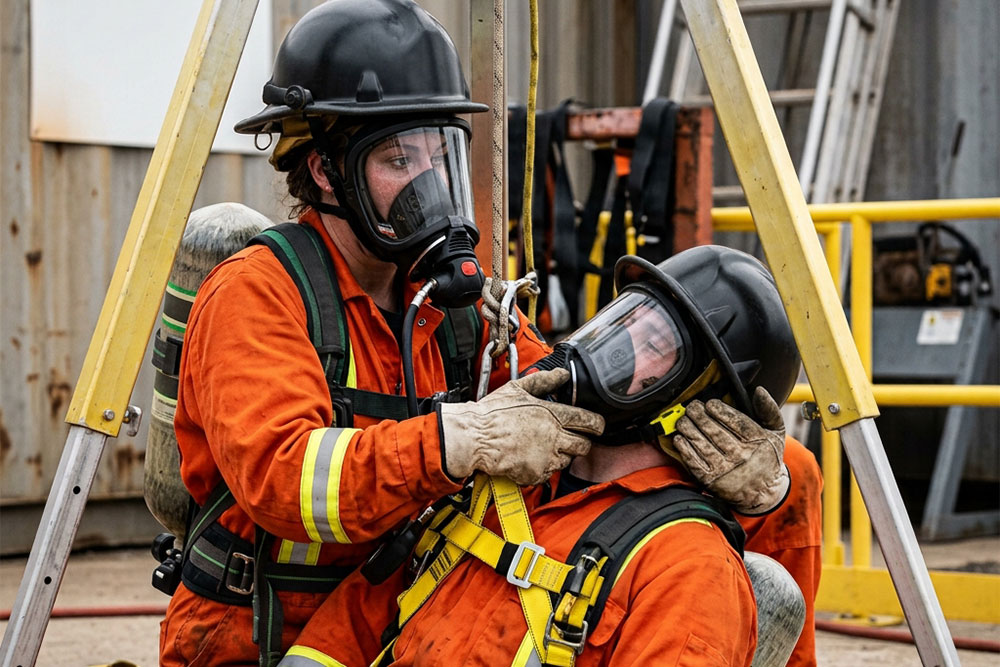
Rescue training builds directly on awareness content but adds an entirely different skill set – one focused on safely retrieving and assisting a downed coworker without becoming a second victim. This includes proper use of self-contained breathing apparatus and escape sets, safe approach and retrieval techniques, casualty assessment, and coordinated team-based rescue procedures.
Looking at the hydrogen sulfide training differences awareness rescue job function breakdown, rescue-level training is generally reserved for designated rescue team members, senior technicians, and supervisors who may be called on to respond during an actual emergency – not every worker on-site needs this level of training, but every site needs enough people who do.
Who Actually Gets Hurt in H2S Incidents
The data on who actually gets hurt in H2S incidents makes the awareness-versus-rescue distinction even clearer. The chart below breaks down casualties from a peer-reviewed review of 80 hydrogen sulfide workplace fatalities and related injuries – showing just how large a share involved coworkers attempting an unplanned rescue.
Matching Training Content to Your Role
Understanding H2S safety training content and applicability for different roles means recognizing that job function, not job title alone, determines what’s required. A few general patterns show up consistently across the industry:
- General site workers, visitors, and administrative staff near H2S-risk areas typically need awareness training only
- Field technicians and maintenance staff working directly around wellheads, tanks, or processing units usually need awareness training as a minimum, sometimes rescue depending on site policy
- Designated emergency responders and rescue team members need full rescue certification, including hands-on simulation
- Supervisors and site safety officers often need rescue-level training even if they’re not part of the primary response team, since they may need to coordinate an emergency response
Certification Needs and the Value of Getting It Right
When weighing H2S awareness vs. rescue training certification needs and benefits, it helps to think about both compliance and practical value. Awareness certification satisfies the baseline legal requirement for site access in most H2S-risk environments. Rescue certification, while requiring a longer time and cost investment, positions workers for higher-responsibility roles, often comes with better pay, and – more importantly – means there are enough properly trained people on-site to respond safely if something goes wrong. Choosing the wrong course isn’t just a wasted registration fee. Enrolling in awareness-only training when your role genuinely requires rescue competency leaves a dangerous gap that only becomes obvious during an actual emergency.
Choosing the Right Training Path
Given how much this distinction matters, it’s worth working with a provider that helps you figure out the right course rather than just selling whichever one is easiest to book. INFINITY STUDIES & TECHNICAL SOLUTIONS (ISTS) offers both H2S awareness and full rescue training, with guidance to help workers and employers match the right course to the right role.
Not sure which course your role requires? Contact ISTS today, and we’ll help you figure out the right H2S training path for your job function.