

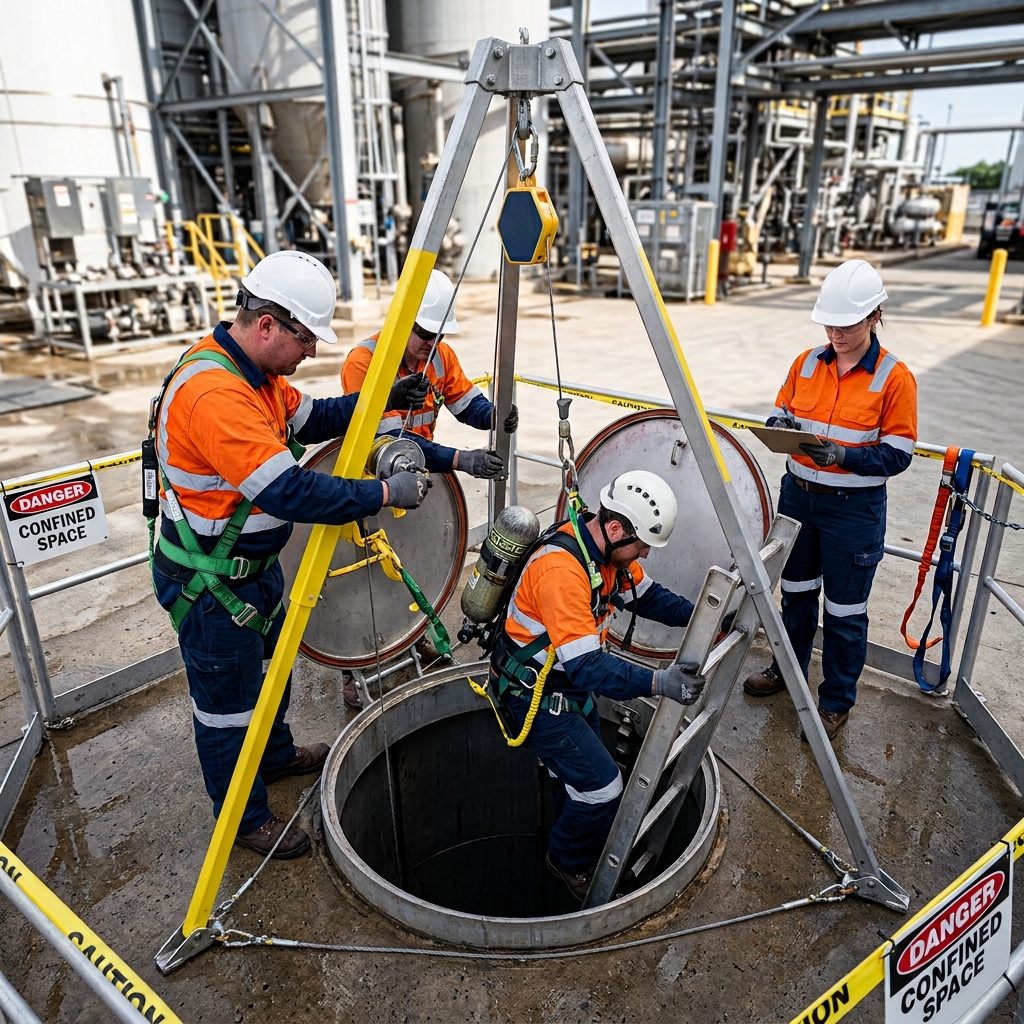
Your first confined space entry can feel intimidating, and honestly, it should feel that way – a healthy amount of caution is exactly what keeps people safe in these environments. Tanks, vessels, pits, and silos aren’t spaces designed for people to occupy for long, and that basic fact is at the root of why Confined Space Entry Training exists as a formal, structured requirement rather than something workers pick up casually on the job.If you’re new to this kind of work, this guide walks through the training process step by step, exactly the way a first-timer needs to understand it – no assumed prior knowledge required.
Why This Training Matters More Than You Might Think
The numbers here are sobering, and they’re worth knowing before you ever step into a confined space. According to the National Institute for Occupational Safety and Health, a division of the CDC, decades of fatality investigations have consistently found the same root causes behind confined space deaths: lack of hazard recognition, lack of atmospheric testing and monitoring, and lack of a planned rescue procedure. Their research also shows that more than 60 percent of confined space fatalities happen to rescuers – people who went in to help a colleague without proper preparation and became victims themselves.
That statistic alone explains why a proper Confined space entry training step-by-step guide for first-timers in 2026 spends so much time on rescue procedures, not just entry procedures. Knowing how to get in safely is only half the picture.
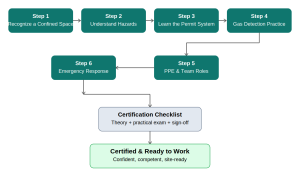
Step 1: Learn to Recognize a Confined Space
Before anything else, first-timers need to understand what actually qualifies as a confined space. It’s an area large enough to enter and work in, with limited or restricted means of entry and exit, and not designed for continuous occupancy. Tanks, manholes, silos, and storage vessels are common examples, but the definition can apply to less obvious spaces too, which is exactly why formal training – rather than instinct – is what teaches you to spot them correctly.
Step 2: Understand the Hazards
Once you can identify a confined space, the next step covers what actually makes them dangerous. Atmospheric hazards top the list – oxygen deficiency, toxic gas buildup, and flammable vapors can all be present without any visible warning sign. Physical hazards like engulfment, restricted movement, and unexpected mechanical activation round out the picture. This is covered in detail in any legitimate new worker confined space entry procedures training manual, since misjudging a hazard is one of the most common causes of preventable incidents.
Step 3: Learn the Permit System
Confined space entry is governed by formal permit-to-work systems almost everywhere. First-timers need to understand what this actually involves: documented atmospheric test results, named entry supervisors and attendants, a clear time window for the work, and pre-arranged emergency response plans. Nothing about entry happens informally once a proper system is in place.
Step 4: Get Hands-On With Gas Detection Equipment
This is where training moves from theory into practice. New workers need supervised, hands-on time with gas detection instruments – learning to calibrate them correctly, interpret readings accurately, and understand that a single pre-entry test isn’t enough. Continuous monitoring throughout the work period is non-negotiable, since atmospheric conditions can shift due to ventilation changes or disturbed materials.
Step 5: Understand PPE and Roles
Training also covers the equipment you’ll actually be wearing and using – harnesses, retrieval systems, respiratory protection, and communication devices – along with the specific roles involved in any entry: the entrant doing the work, the attendant monitoring from outside, and the entry supervisor overseeing the whole operation. First-timers especially benefit from understanding these roles clearly, since confusion about who’s responsible for what is a common contributor to incidents.
Step 6: Learn Emergency Response – And Why You Shouldn’t Improvise It
This step deserves extra attention for beginners specifically, given what the NIOSH data shows about rescuer fatalities. Training teaches you to recognize signs of distress, communicate emergencies quickly, and – critically – to wait for a designated, properly equipped rescue team rather than attempting a spontaneous rescue yourself. It feels counterintuitive to hold back when a colleague is in trouble, but untrained rescue attempts are exactly what turn single incidents into multiple-fatality events.
Confined Space Entry Training
What This Looks Like in Practice
Understanding the flow from basics to certification helps first-timers see the bigger picture rather than getting lost in individual steps. The diagram below walks through the six-step training path, from recognizing a confined space all the way to being certified and ready to work.
Certification Requirements and Checklist
Before you’re considered fully trained, most programs require you to work through a defined Confined space safety training requirements certification checklist:
- Completion of classroom or online theoretical modules
- Hands-on practical assessment with real detection and safety equipment
- A written or practical competency exam
- Documentation of successful completion, typically valid for a set renewal period
- Employer sign-off confirming site-specific procedures have also been covered
What Is Confined Space Entry Training, In Simple Terms
If you’re still asking What is confined space entry training basics beginner workers need to know are, it really comes down to this: it’s the structured process of teaching someone to recognize confined space hazards, test and monitor the atmosphere, use the right equipment, follow formal entry procedures, and know exactly what to do – and what not to do – if something goes wrong.
Getting Started the Right Way
For first-timers, choosing a training provider that takes hands-on preparation seriously makes all the difference. INFINITY STUDIES & TECHNICAL SOLUTIONS (ISTS) offers structured confined space training built around real scenarios, helping new workers build genuine confidence and competency rather than just passing a test.
Ready to get certified? Contact ISTS today to find the right confined space training course to start your career off safely.